
Affordable eSIM Plans for International Travel Without the Hidden Costs
Struggling with expensive roaming fees every time you travel? A cheap eSIM is simply a digital SIM card that lets you buy affordable data plans online and activate them instantly, without needing a physical card. It works by scanning a QR code or entering a code into your phone, giving you local rates in foreign countries at a fraction of the cost. With a cheap eSIM, you can skip the airport kiosk lines and the stress of overpriced hotel Wi-Fi, staying connected as easily as you do at home. All you need is a compatible phone, and you can purchase a budget-friendly plan in minutes, using your own device just as you normally would.
What Exactly Is a Budget-Friendly eSIM and How Does It Save You Money?
A budget-friendly eSIM, or cheap eSIM, is a digital SIM card you buy online for a fraction of what your home carrier charges for roaming. Instead of paying daily fees, you download a data-only profile that connects to local networks. It saves you money because you’re buying data in bulk for your specific destination, often at local rates rather than international markup. For example, a $5 plan for 5GB in Europe replaces a $60 roaming pass. Plus, you avoid physical SIM shipping costs, and you can compare dozens of providers instantly to snag the lowest price per gigabyte. That’s the core: you pay only for the data you need, not for the convenience of your usual network.
Breaking Down the Tech: Why Digital SIMs Cost Less Than Physical Cards
The cost advantage of a cheap eSIM begins with removing the physical supply chain. A plastic SIM requires manufacturing, packaging, shipping, and retail distribution—each step adding a markup you ultimately pay. A digital SIM skips all that: it’s a software file pushed directly to your device, so the provider’s overhead drops to server bandwidth alone. That’s why roaming eSIMs cost a fraction of physical travel SIMs. You also avoid courier fees or airport kiosk surcharges. And because there’s no card to replace, you never pay for a damaged or lost SIM. The hardware cost is zero; the savings are passed to you.
The Hidden Fees You Avoid by Going Digital Instead of Buying a Plastic SIM
When you buy a plastic SIM at the airport kiosk, the sticker price is rarely the final one. You often get hit with an activation fee, a “top-up minimum” for data you don’t need, or a surprise charge for cutting the card to fit your phone. Going digital with an eSIM eliminates these physical-card markups entirely—no packaging, no retail overhead, and no staff commission to cover. You also dodge the dreaded “replacement fee” if you lose or damage that tiny chip mid-trip. Instead of paying extra to unlock your phone for a local SIM, the eSIM’s QR code slots in for free, and you only pay for the exact plan you scan. No currency conversion fees on a plastic purchase, either, since you buy online in your home currency. That’s cash you keep just for choosing digital.
By skipping the plastic card, you avoid activation fees, retail markups, replacement costs, and conversion surcharges—leaving more of your budget for actual data.
How to Find the Lowest-Priced Data Plans Without Sacrificing Coverage
To secure the lowest-priced data plans without sacrificing coverage, start by comparing eSIM providers that lease network space from top-tier local carriers—not obscure ones. Check each plan’s coverage map against the specific cities you’ll visit, then filter by price per gigabyte rather than total cost. Buy only as much data as you need, since cheap eSIMs often offer steep discounts for smaller packages, and top up later if required. Look for plans that prioritize stable LTE over faster-but-flaky 5G, as this slashes cost while maintaining reliability. Finally, read recent user reviews mentioning real-world signal strength, and choose a provider with free roaming on multiple networks—this ensures you’re never locked into a weak connection, even on the best-value Travel SIM Card And eSIM tier.
Comparing Pay-As-You-Go vs. Short-Term Data Bundles for Thrifty Travelers
For thrifty travelers, choosing between pay-as-you-go and short-term bundles hinges on your data discipline. Pay-as-you-go eSIMs shine for sporadic use—like checking maps or messaging—since you only pay for megabytes consumed, avoiding waste entirely. Conversely, short-term data bundles for thrifty travelers offer superior peace of mind and lower per-GB costs when you’ll stream, navigate, or upload daily. If you burn through data liberally, bundles prevent sticker shock from overage charges. But if you use only a few hundred MB weekly, pay-as-you-go keeps your budget razor-thin. Always estimate your typical usage honestly; overestimating pushes you to costly bundles, while underestimating with pay-as-you-go risks higher per-unit rates.
Pay-as-you-go suits light, unpredictable users; short-term bundles reward heavy consumers with cheaper bulk data and predictable spending.

Regional Plans vs. Global Passes: Which One Is Truly Cheaper for Your Route?
For a single-country trip, a **regional plan is almost always cheaper** than a global pass—you’re not paying for coverage in 50 countries you’ll never visit. But if you’re hopping across three or more neighboring nations (like Spain, France, and Italy), a regional eSIM often beats piecing together local plans. Global passes win only when you’re zigzagging across continents or flying last-minute between distant spots. The real trick is mapping your exact itinerary: count every country, then compare a regional zone (e.g., Europe) against a global package. Often, the global pass’s “convenience tax” adds 30–50% more per GB, so for predictable routes, regional plans deliver the lowest price per gigabyte. Only choose global if your route is unpredictable or spans 5+ countries.
| Situation | Cheaper Option |
|---|---|
| 1–2 neighboring countries | Regional plan |
| 3+ countries in same zone | Regional plan (slightly cheaper) |
| 5+ countries or intercontinental | Global pass |
| Last-minute route changes | Global pass (flexibility > cost) |
Don’t fall for “unlimited” global ads—check your actual data usage first. For a 7-day Spain-only trip, a regional Iberia plan at $8 for 5GB beats a global pass at $20 for 5GB. Zone-locked pricing is your friend if you stay inside that zone. Bottom line: regional saves cash for fixed routes; global saves stress for chaotic ones.
Step-by-Step Guide to Activating a Low-Cost eSIM in Under Five Minutes
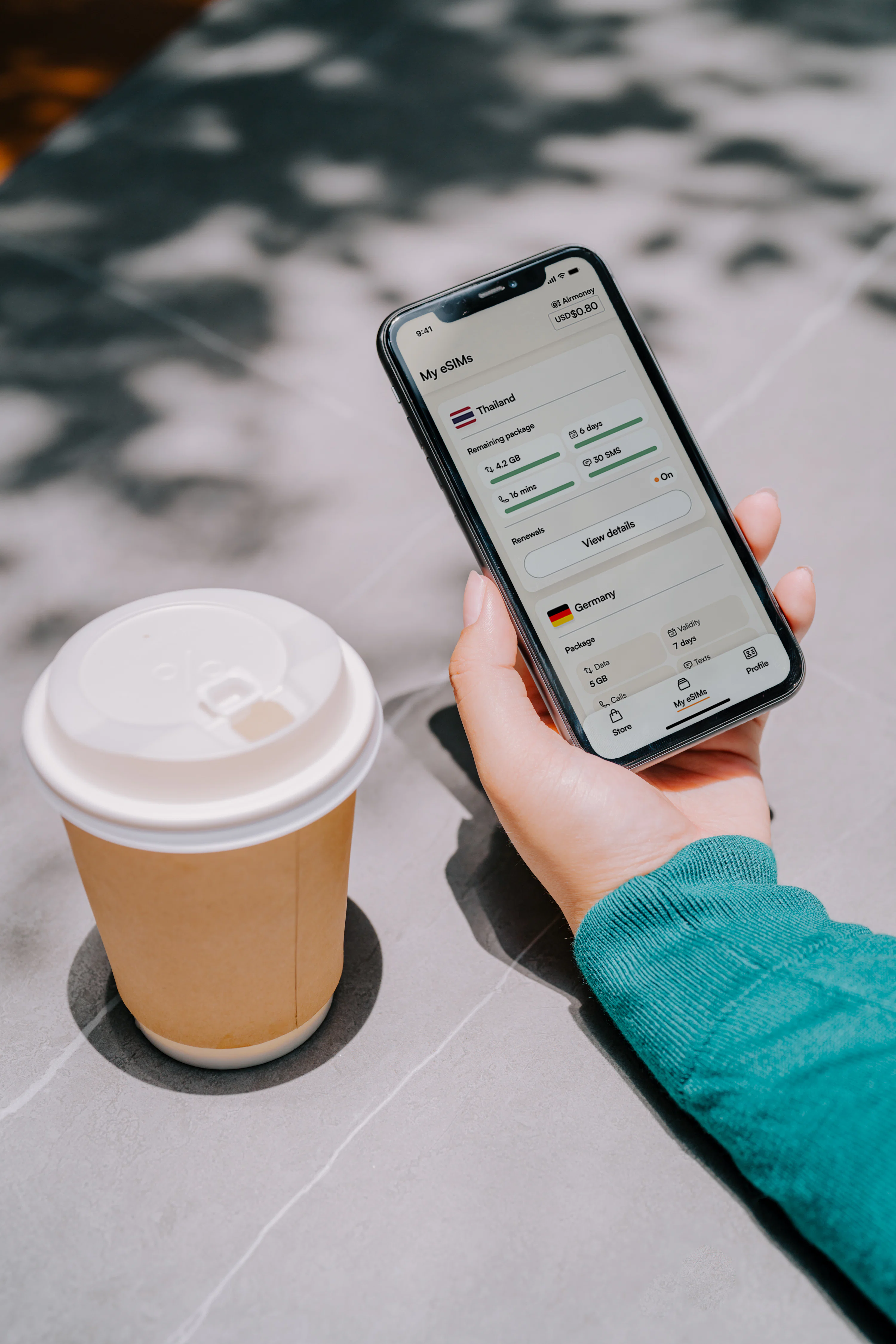
To activate a cheap eSIM in under five minutes, start by buying a budget data plan from a provider like Airalo or Holafly, then immediately check your email for the QR code—don’t get side-tracked comparing plans. Speed matters because your old SIM might still be active, so scan the QR code using your phone’s cellular settings right away (on iPhone: Settings > Cellular > Add eSIM; on Android: Settings > Connections > SIM manager). After scanning, name the eSIM “Travel” and set it as your default for data, but keep your primary SIM for calls. You’ll likely need to turn on data roaming—yes, even for cheap eSIMs—but disable automatic network selection to avoid surprise charges.
The trick is to activate your cheap eSIM *before* you board, using Wi-Fi, so you land with zero downtime and never fumble at baggage claim.
Finally, run a quick speed test on a free site to confirm the connection, then toggle airplane mode off and on. Done—you’re online with a low-cost data plan, all inside the five-minute window.
Checking Phone Compatibility Before You Purchase—and What to Do If It’s Unsupported
Before buying any cheap eSIM, verify your device supports eSIM via the manufacturer’s spec sheet or by dialing `*#06#`—if no EID appears, your phone is locked out. For iPhones, check Settings > General > About for “Digital SIM”; on Androids, search “eSIM” in settings. If unsupported, do not force a physical SIM workaround, as your carrier will not honor activation. Instead, confirm if your device has a regional variant (e.g., a US-model phone may lack eSIM while the global version does not). If truly incompatible, purchase a universal QR code from a provider offering a refund policy, then test the eSIM during a free trial window before committing to a data plan. Otherwise, revert to a standard nano-SIM from the same low-cost carrier to avoid wasted money.
Always confirm eSIM support via EID or settings before purchasing; if unsupported, seek a refundable QR or fall back to a physical SIM from the same cheap provider.
Scanning the QR Code and Setting Up APN Settings Without a Hassle
Scanning the QR code is the fastest path to activating a cheap eSIM, but only if you avoid common pitfalls. First, ensure your device’s camera is clean and you have stable Wi-Fi, as the QR contains the activation token. After scanning, the profile installs automatically; however, if data fails, the culprit is often a missing APN. For budget carriers, you must manually key in the APN—usually just an “APN” field, leaving username and password blank. Save the profile, reboot, and toggle airplane mode to force the network refresh. Manual APN configuration for cheap eSIM is typically a 30-second fix that prevents costly support calls.
- Scan the QR code in a well-lit area to avoid camera focus errors.
- Copy the APN from your provider’s confirmation email before starting.
- After saving APN settings, restart your phone and test data immediately.
- If no signal, delete and re-add the APN, ensuring no stray spaces.
Smart Ways to Stretch Your Prepaid Data Allowance Further
To truly stretch your prepaid data allowance with a cheap eSIM, start by switching your device to “Low Data Mode” to block automatic background refreshes for email and social feeds. Pre-download offline maps for your destination while on Wi-Fi, and disable cloud photo backup entirely—upload only when connected to a free hotspot. For streaming, drop video quality to 480p and use audio-only for music; this alone can cut consumption by 70%. Keep your eSIM’s native network for essentials, but rely on Wi-Fi calling for voice. Finally, monitor usage via the eSIM app daily; seeing what drains your data early lets you adjust before you hit the cap, ensuring your cheap plan lasts the entire trip.
Switching Between Multiple eSIM Profiles to Grab the Cheapest Local Rates
Your phone’s eSIM lets you store several profiles at once, so you can swap to a local carrier the moment you cross a border, instantly grabbing the cheapest data rates without hunting for physical SIMs. Before departure, pre-load a few regional profiles, then use your device’s settings menu to switch between them as prices shift or you move through different zones. **Switching between multiple eSIM profiles** takes under a minute, and you can compare live per-GB costs from your provider’s app, then jump to the most affordable option. Keep your home number active for calls, but disable its data, using the local profile for browsing to stretch every megabyte.
Using Wi-Fi Calling and Offline Maps to Prevent Data Drain on Your Wallet
Activating Wi-Fi calling on your cheap eSIM routes calls and texts through any available hotspot instead of your cellular data bucket, eliminating per-minute deductions for voice traffic during travel. For navigation, download offline map regions for your destination before departure, then switch your phone to airplane mode while retaining Wi-Fi for intermittent route recalculation. This prevents background map tile refreshes from silently consuming your allowance. Pairing these two tactics means your prepaid data stays reserved exclusively for essential cloud-based tasks, stretching every megabyte further without sacrificing connectivity or directional accuracy.
What to Watch Out For When Buying Ultra-Cheap Data Packages
When buying ultra-cheap eSIM data packages, first verify the actual coverage map, as budget carriers often route traffic through a single, congested partner network that fails in rural zones. Check the fair-use policy’s fine print—”unlimited” plans may throttle to 128 kbps after a few gigabytes, making video calls useless. Confirm whether the package includes a local number or is data-only; some activate only after you land and require a stable Wi-Fi connection for the initial download. Beware of expiry dates that start *at purchase*, not activation, so a pre-trip buy can waste days. Finally, test the APN settings before departure; many ultra-cheap eSIMs require manual configuration, and without it, you’ll face silent data failure at the airport.
Spotting Fake “Unlimited” Deals and Understanding Fair Usage Policies
When scanning ultra-cheap eSIMs, “unlimited” plans often conceal hard speed caps or data thresholds after a few gigabytes. Check the fair usage policy (FUP) for a *typical data allowance*—providers may throttle to 128 kbps, making video or maps unusable. Look for wording like “unlimited at reduced speeds” or “fair use limit” in the terms. Compare advertised speeds before and after the cap; a genuine deal states both. If the FUP mentions “network management” without specific numbers, treat it as a red flag. Also, verify if tethering is excluded—many budget plans block hotspot use under their FUP.
| Red Flag | Genuine Detail |
|---|---|
| “Unlimited” with no speed tier after 5 GB | Explicit post-cap speed (e.g., 1 Mbps) |
| FUP vague (“may slow”) | Quantified limit (e.g., “20 GB at full speed”) |
| No mention of tethering | Clear tethering policy (allowed/blocked) |
Why a Slightly Pricier Provider Might Be Cheaper in the Long Run (No Surprise Top-Ups)
An ultra-cheap eSIM often hides its real cost behind aggressive throttling or per-megabyte overage rates once a tiny “high-speed” bucket is exhausted. A slightly pricier provider typically bundles a transparent, workable data allowance, meaning you never face a forced, awkward top-up mid-journey for navigation or messaging. These surprise purchases, often at inflated rates, accumulate quickly and easily surpass the upfront savings. Moreover, mid-tier plans frequently include rollover data or automatic speed capping instead of billing you again, which converts an unpredictable variable cost into a fixed, budgetable one. Thus, paying a few dollars more initially eliminates the financial sting of emergency refills.
Slightly higher upfront fees erase the risk of expensive, urgent top-ups, making the total cost lower and predictable.

Answers to Common Questions About Affordable Digital SIMs
Common questions about affordable digital SIMs often center on device compatibility and activation. A cheap eSIM works only in unlocked phones that support eSIM technology, so checking your device’s IMEI is the first practical step. Most budget-friendly plans activate within minutes via a QR code or manual entry, with no physical card to wait for. Users frequently ask about data top-ups: cheap eSIM providers typically offer flexible, pay-as-you-go bundles, allowing you to add data without buying a new plan. Coverage quality depends on the host network, not the eSIM price, meaning a low-cost option can still deliver strong signals in urban areas. Switching plans is instant and requires no SIM swap, but remember that unused data usually expires per plan terms. While cheap eSIMs lack physical support channels, their self-service portals resolve most issues quickly, provided you read the coverage map carefully before purchase. Finally, retaining your home number is possible with dual-SIM settings, so call forwarding remains unaffected.
Can You Keep Your Original Number Active While Using a Discount eSIM?

Yes, you can absolutely keep your original number active while using a discount eSIM, because most phones support dual SIM functionality. Your physical SIM (or primary eSIM) remains live for calls and texts, while the cheap eSIM handles data—so you never lose important contacts. This makes **keeping your original number active with a discount eSIM** hassle-free, especially when traveling. Just ensure your phone is carrier-unlocked and both profiles are enabled. Dual SIM setup lets you retain your home number without paying roaming fees on data.
Can you keep your original number active while using a discount eSIM? Absolutely—activate the eSIM for data only, and your original SIM stays on for voice and SMS. No need to swap or deactivate anything.
What Happens to Unused Data When Your Low-Cost Plan Expires?
When your low-cost eSIM plan expires, unused data is almost always forfeited instantly, with no rollover or refund. Budget carriers structure these plans around non-recurring allowances, so any remaining megabytes vanish at the exact expiry timestamp. Even if you reconnect the same eSIM profile later, the previous balance stays permanently zeroed. Your only practical option is to monitor the data counter before expiration and deliberately consume leftovers—streaming, mapping, or cloud backups—so you extract full value. Purchase only the smallest tier that matches your realistic usage window, because paying for buffer data you never touch is wasted money. Unused data on expired cheap eSIM plans is non-recoverable, so plan consumption tightly around the active period.
- Data resets to zero immediately at plan expiry, regardless of remaining amount.
- No carrier offers rollover or credit for unused megabytes on budget eSIM tiers.
- Reactivating the same eSIM after expiry starts a fresh allowance, not a restored one.
- Manual tracking via device settings prevents accidental waste before deadline.